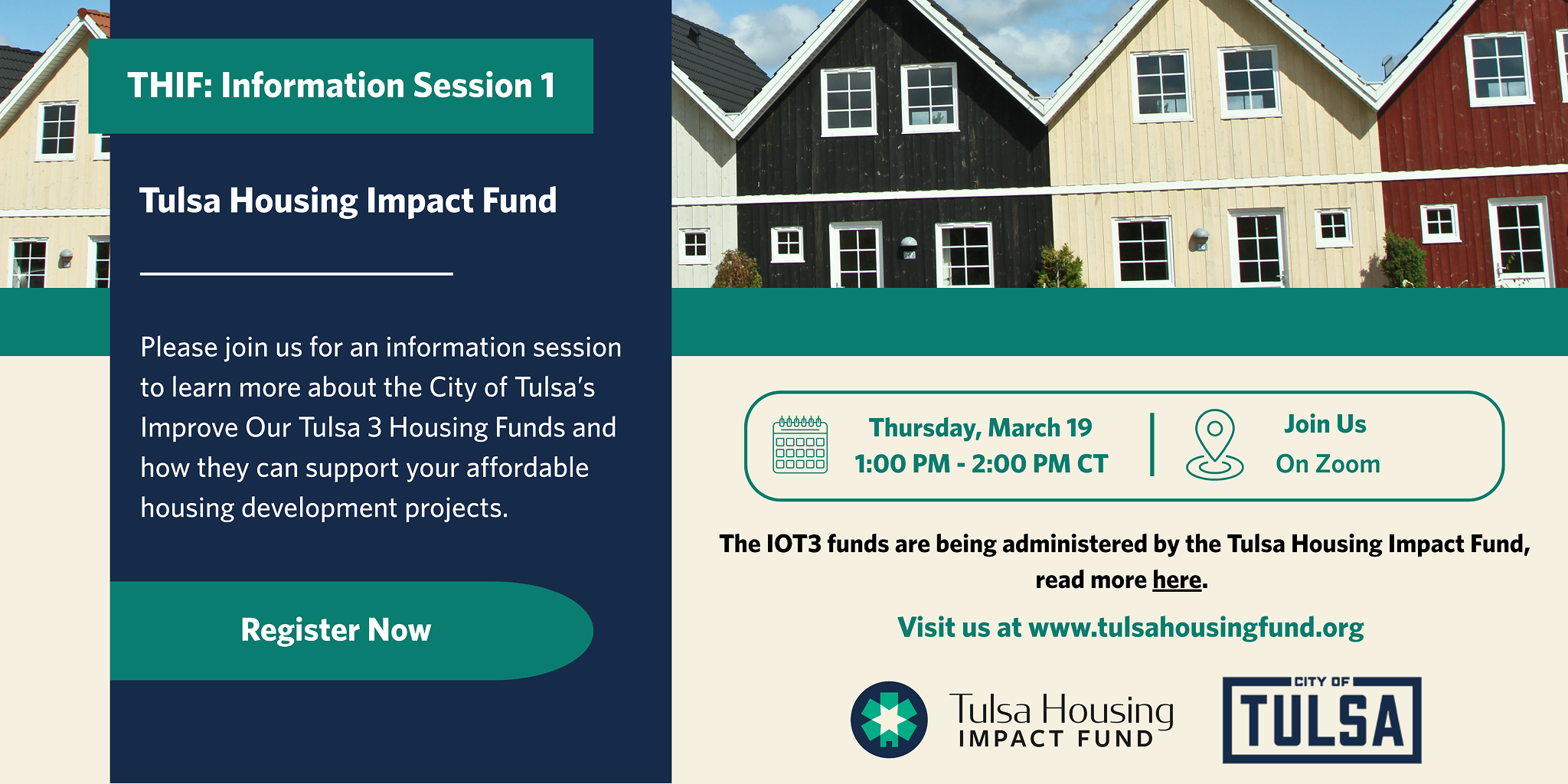
Tulsa is facing a growing housing crisis — and access to capital is a key part of the solution. The Tulsa Housing Impact Fund provides flexible financing to strengthen housing options across the city, with a commitment to ensuring that capital reaches neighborhoods historically left out of investment.

Local & National expertise

Affordable rental + homeownership

Tulsa, Oklahoma

Targets housing at or below 120% AMI

Predevelopment to permanent financing
Explore how your capital will move Tulsa forward.
Tulsa’s housing shortage isn’t just a data point. It’s a barrier to growth, equity, and opportunity.
The Tulsa Housing Impact Fund tackles this head-on with $80 million in flexible capital dedicated to the growing need for affordable and workforce housing.
We’re laser-focused on supporting local non-profit and for-profit organizations developing affordable housing in Tulsa.
Raised across HPN and its social enterprises
Active loans and investments under management
Deployed annually across the United States
Housing Partnership Network (HPN) is an A+ Fitch-rated and AA- Aeris-rated national CDFI that has raised over $1 billion to support innovative solutions to our nation’s affordable housing crisis. As an Aeris-rated CDFI, HPN has directly committed over $700 million nationwide in support of affordable rental and homeownership housing solutions. Additionally, as a fund manager, it has overseen the deployment of over $300 million for the preservation and development of affordable housing across various programs, including the Housing Partnership Equity Trust, New Market Tax Credits for Homeownership, and the Community Aggregators Group.
Housing Partnership Network (HPN) is a nonprofit collaborative of more than 118 leading affordable housing and community development organizations, proving that strong, independent groups can achieve more together than alone. HPN members include developers, lenders, owners and operators, and homeownership advisors who work to produce and preserve affordable rental and for-sale housing across the country. Together, they scale solutions that expand access to safe, healthy, high-quality homes and provide nearly 500,000 low-wealth families each year with stability and pathways to build wealth.
In addition to national efforts, HPN supports place-based initiatives such as the preservation and transformation of hundreds of single-family homes into affordable rental and homeownership opportunities in the Twin Cities region, and a decarbonization “readiness” program in the Boyle Heights neighborhood of Los Angeles that helps members prepare their housing portfolios for clean energy investment.

Learn more about HPN ↗
Tulsa is a city shaped by history and resilience — yet like many American communities, it faces a severe shortage of affordable housing and the infrastructure needed to build at scale. Tulsa’s housing market faces a shortage of affordable homes and a persistent capital gap that limits development opportunities. The Fund exists to help close this gap — expanding the supply of quality, attainable housing while addressing long-standing patterns of underinvestment in parts of the city.
The Tulsa Housing Impact Fund was created in response to both this history and this promise: to help seed a new era of investment in communities long excluded from opportunity, and to support the development of housing that reflects equity, repair, and renewal.
Read more about Tulsa ↗
The Tulsa Housing Impact Fund advances an equitable and sustainable housing future by mobilizing mission-aligned capital to increase affordable and workforce housing across the City of Tulsa. We focus on historically underinvested neighborhoods, particularly in North and East Tulsa. The Fund offers an array of financial products to support all developers working to build housing in Tulsa, ensuring inclusive access to capital. Our investments span both rental and for-sale housing, building long-term opportunity and community wealth for the residents of Tulsa.
Explore our flexible investment options.

Enterprise-level investment, designed as flexible working capital to support owning, operating, and acquiring affordable housing.

Project-level loans or line of credit structure to finance predevelopment costs of housing development projects.

Project-level loans or line of credit structure to finance the acquisition of land, single-family homes, or operating multifamily properties.

Direct project equity investment to leverage project debt.

Direct grants or deeply subordinate/delayed pay loans to fill project gaps and catalyze development.
Tulsa Developer Accelerator Program
The Developer Accelerator Program combines access to flexible capital with additional support to help developers bring affordable housing projects to life. THIF partners with local and national organizations to provide guidance on project readiness, financial reporting, and navigating the development process.

Solutions including working capital lines of credit and project-level investments.

Assistance with deal structuring, reporting, subsidy access, and investor readiness.

Connections to public and private partners ready to support housing growth and technical assistance.
Are you a developer with a project aligned with our mission?
Submit your proposal or express interest here.
Our board blends local insight and national experience to power this fund’s success.
%20-%20Tulsa%20Housing%20Investment%20Fund.png)
Chair
President
The Anne & Henry Zarrow Foundation
%20-%20Tulsa%20Housing%20Investment%20Fund.png)
Vice Chair
Senior Vice President, Director of ACCESS
Community Preservation Corporation
%20-%20Tulsa%20Housing%20Investment%20Fund.png)
Treasurer
Chief Executive Officer
Cherokee Nation Businesses
%20-%20Tulsa%20Housing%20Investment%20Fund.png)
Secretary
President
Historic Greenwood Main Street Program

Member
President & CEO
Housing Partnership Network

Member
Senior Program Officer
George Kaiser Family Foundation

Member
EVP & Chief of Real Estate Development
Eden Housing

Member
Executive Director
Ruth Kaiser Nelson Family Foundation

Associate, Capital Markets
Housing Partnership Network

EVP, Capital Markets
Housing Partnership Network
%20-%20Tulsa%20Housing%20Initiative%20Fund.png)






Whether you're ready to invest or just exploring, our team is here to connect. Fill out the form below and we’ll follow up with what you need to move forward.

.png)
The Tulsa Housing Impact Fund provides flexible financing to strengthen housing options across the city, with a commitment to ensuring capital reaches neighborhoods historically left out of investment.